Papers are being called for the upcoming 26th Annual Meeting of the Philosophy and Religion Society of Thailand (PARST), from December 16 – 18, 2022 at Chulalongkorn University. The time zone of the Meeting will be Bangkok time zone, which is 7 hours ahead of GMT in winter.
Papers on any topics in philosophy or religious studies are welcome. However, the advertised theme of this year’s Annual Meeting is “Political Philosophy”.
Papers should be between 10- 15 pages and must be submitted to us on or before November 15, 2021. The reference style is APA. Notification to authors will be sent by November 30.
Papers can be submitted either in English or Thai. We will separate English-speaking and Thai-speaking paper presenters in separate rooms or sessions.
We will hold the conference both in online and onsite formats. Those whose papers are accepted but cannot travel to the Chula campus are encouraged to present their papers online instead.
Those whose papers are selected for presentation will be invited to submit a revised version for possible inclusion in the Journal of the PARST after the Meeting.
Registration Fees
International presenters (attending online from outside of Thailand): 30 US Dollars
Domestic presenters: 1,200 Baht (Non-members), and 1,000 Baht (Members)
Online participants only: 500 Baht
Important Dates
Deadline for submitting a paper – November 15, 2022
Notification of acceptance/rejection – November 30, 2022
The 5th Asia Network Meeting of the Southeast Asia Hub of the “Incubating Feminist AI Project” will be held on Monday, August 22, 2022 on Zoom. The speakers are Eleonore Fournier-Tombs and Matthew Dailey.
Date and time: August 22, 2022 8 pm to 9.30 pm Bangkok time on Zoom
Topic: “Gender-sensitive AI Policy in Southeast Asia”
Eleonore Fournier-Tombs is a senior researcher at UNU-Macau with an interest in data and technologies for sustainable development. During her career, she has worked as a data scientist throughout the United Nations system and conducted research at the intersection of technology and gender, migration, democracy and health.
Matthew N. Dailey is Professor of Computer Science at Asian Institute of Technology, Thailand. His research interest lie in machine vision and learning, especially as applied to mobile robot perception and navigation. Robotics and intelligent systems together have the potential to revolutionize the way we live and work, keeping us safe, keeping us healthy, and eliminating dangerous and tedious tasks from our lives.
4th Asia Network Meeting – Incubating Feminist AI Project
Speaker: Jun-E Tan
June 6, 2022, 3pm Thailand time on Zoom
Dr Jun-E Tan is an independent researcher based in Malaysia, with her research interests broadly anchored in the areas of sustainable development, human rights, and digital communication. Her current focus is on artificial intelligence and human rights impacts within the context of Southeast Asia. Jun-E’s newest paper, ‘Digital Rights in Southeast Asia: Conceptual Framework and Movement Building’, was published in December 2019 by SHAPE-SEA in an open access book titled Exploring the Nexus Between Technologies and Human Rights: Opportunities and Challenges in Southeast Asia. More information on her research and projects can be found at her website – https://jun-etan.com/
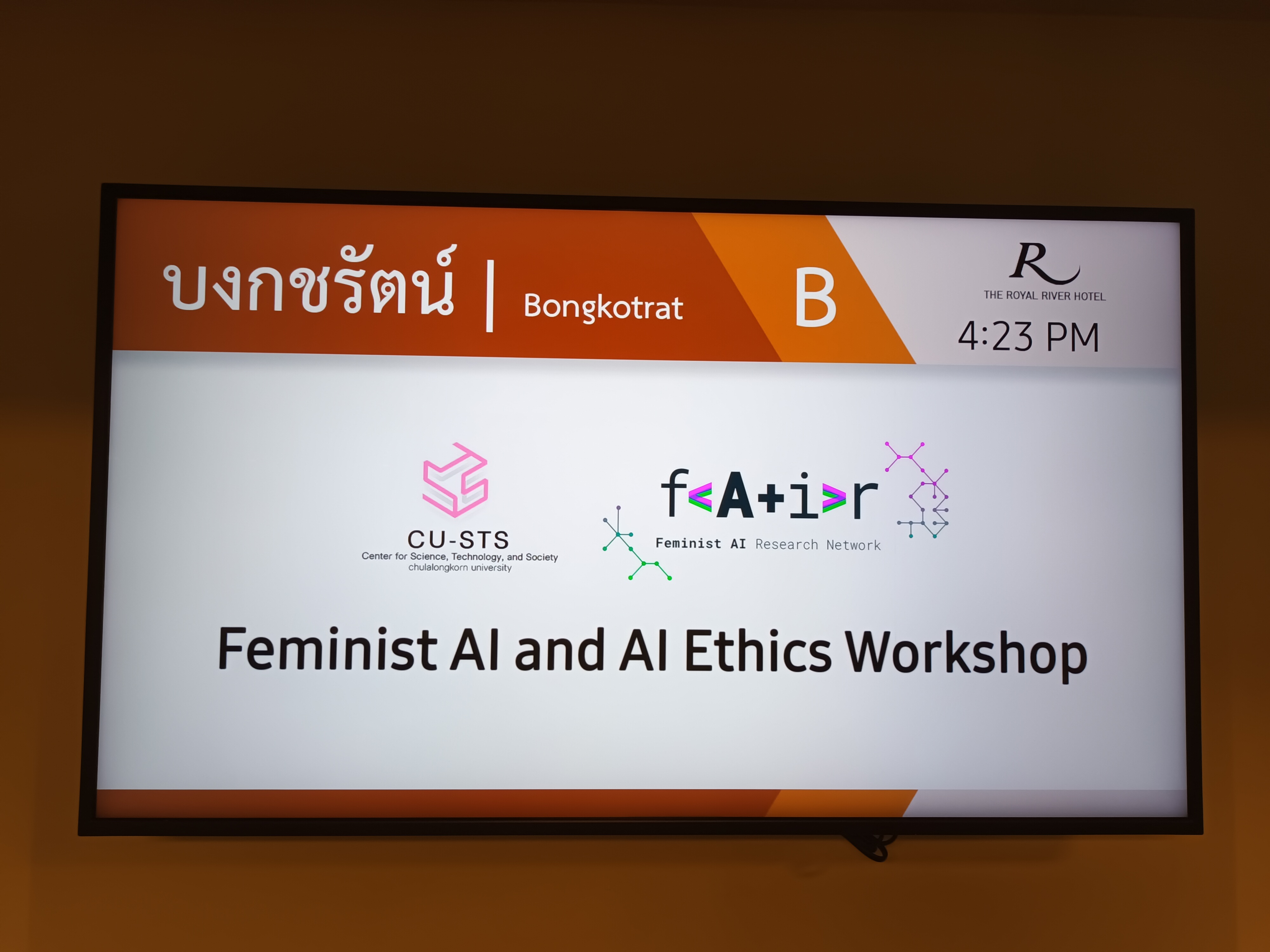
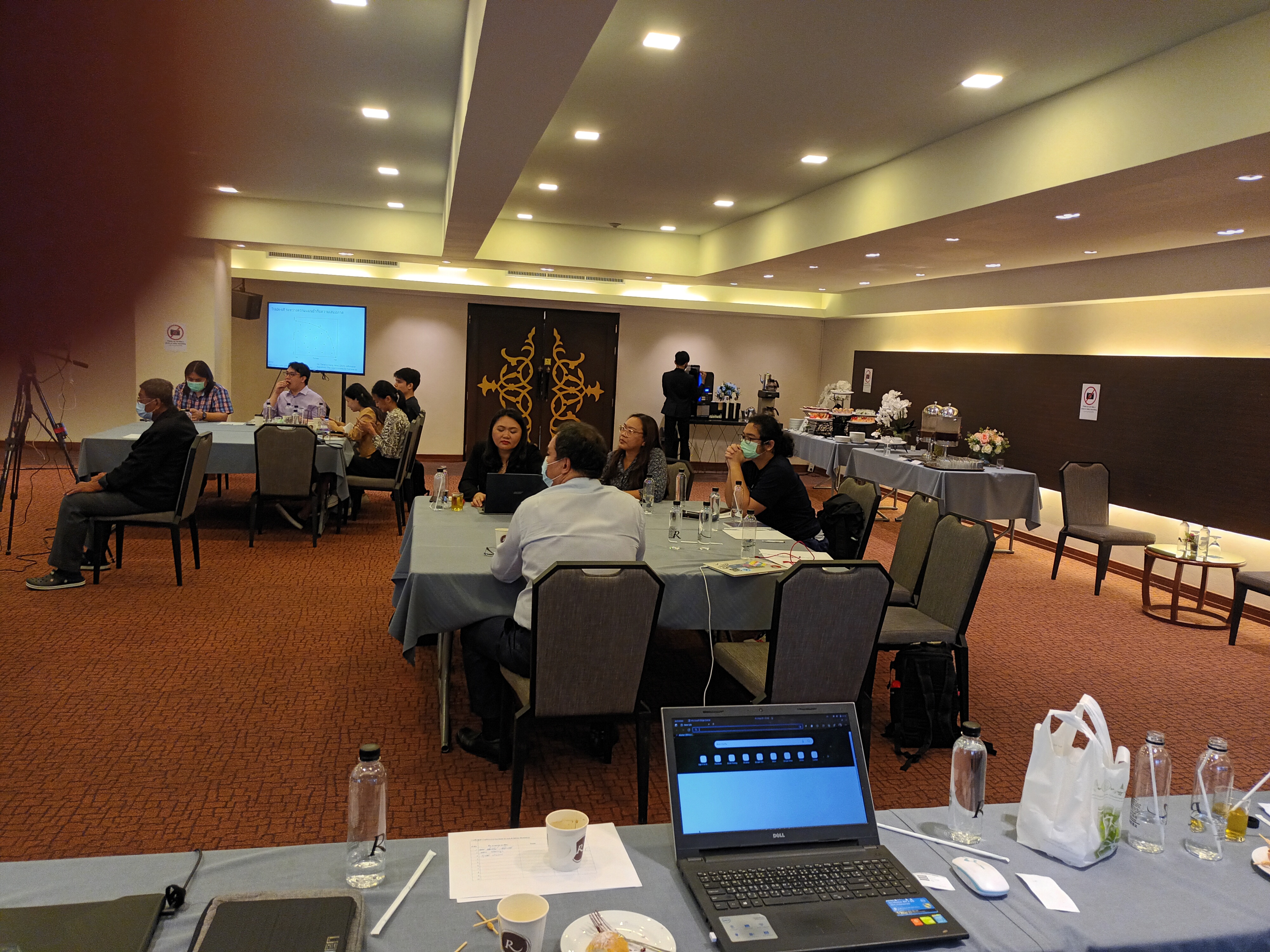
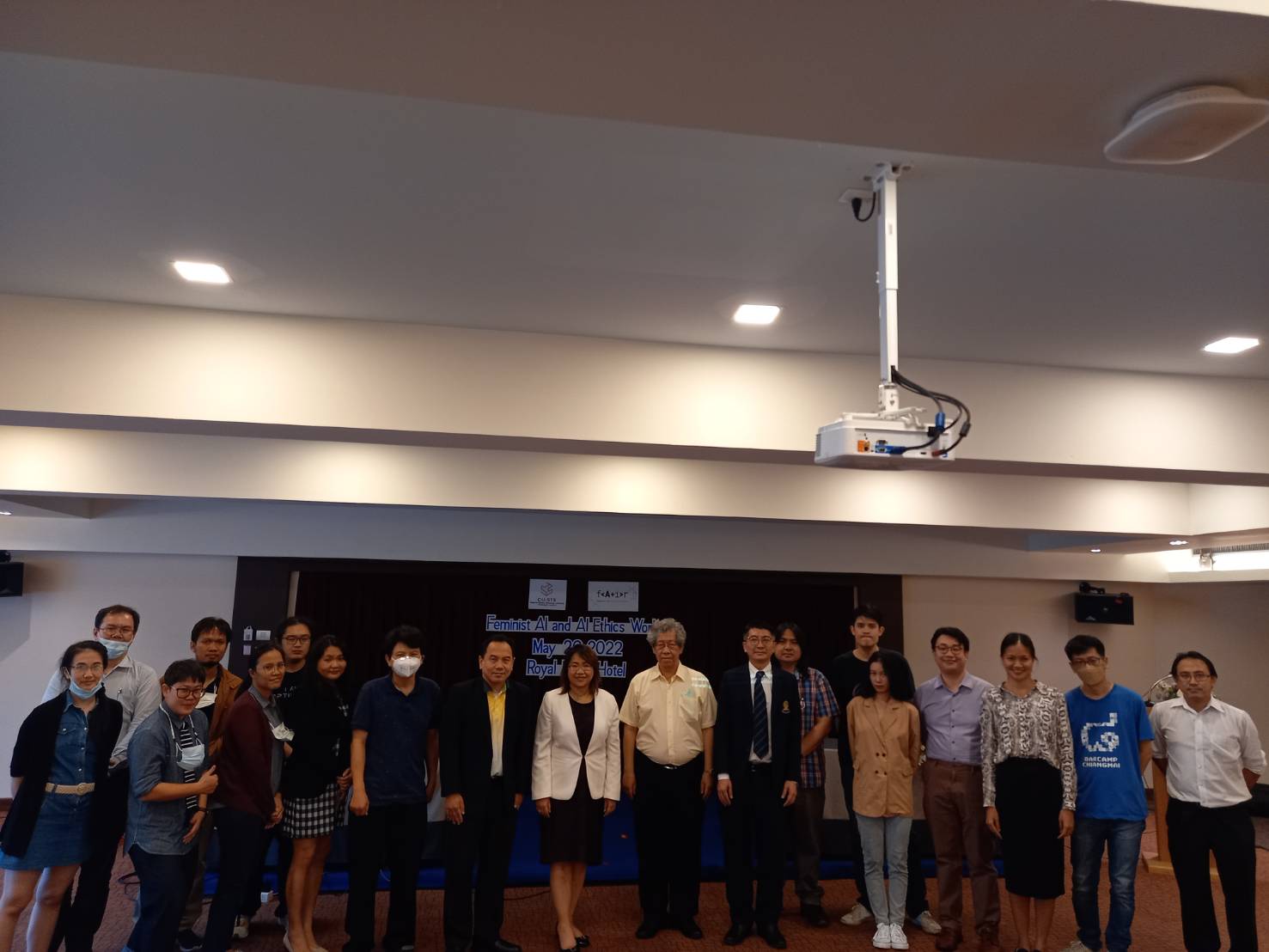
On May 20, 2022, the Southeast Asian Hub of the “Incubating Feminist AI Project” launched its first capacity building workshop, entitled “Feminist AI and AI Ethics” at the Royal River Hotel in Bangkok. The workshop is part of the series of activities organized by the f<A+i>r network, a group of scholars and activists who join together to think about how AI could contribute to a more equal and inclusive society. The Project is supported by a grant from the International Research Development Centre, Canada.
The event was attended by around twenty participants from various disciplines and backgrounds. The aim of the workshop was to equip participants with the basic vocabulary and conceptual tools for thinking about the roles that AI could play in engendering a more inclusive society.
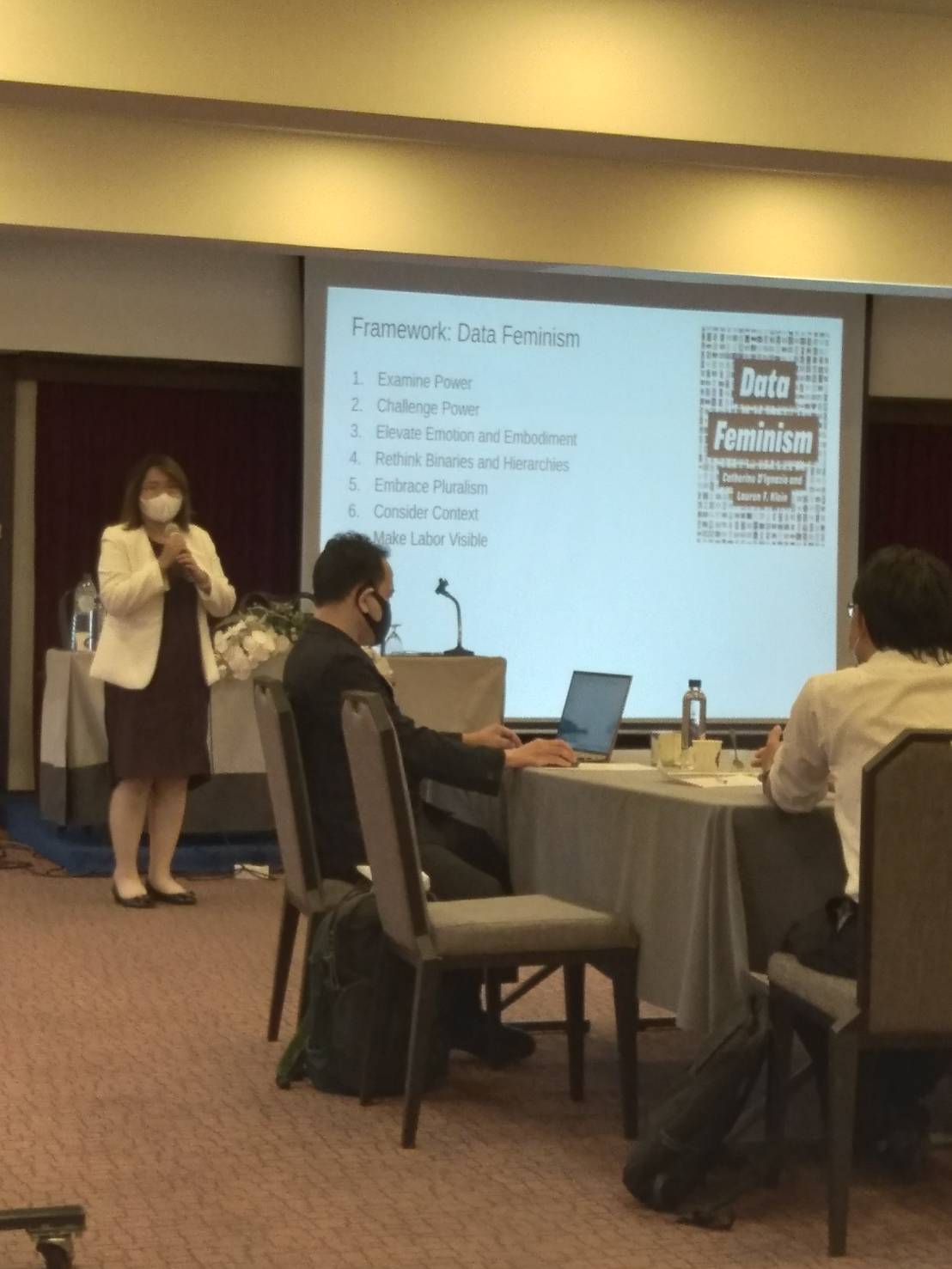
The workshop was opened by Suradech Chotiudomphant, Dean of the Faculty of Arts, Chulalongkorn University. Dr. Jittat Fakcharoenphol and Dr. Supavadee Aramvit were also presented at the Workshop. Jittat was the lead discussant and would take a key role in the group discussion, and Supavadee was a member of the Southeast Asia Hub of the Project. Then Dr. Soraj Hongladarom, Director of the Center for Science, Technology, and Society, presented a talk on “Why Do We Need to Talk about Feminist Issues in AI?” After presenting a brief definition and history of AI, Soraj talked about the reasons why we needed to consider feminist issues in AI, as well as other issues concerning social equality. Basically, the reasons are that gender equality is essential for the economic development of a nation. A nation where both women and men are given the same opportunities and equal rights will be more likely to create prosperity that will benefit everyone, especially when compared with a society that does not give women equal rights and opportunities. Furthermore, there is also a moral reason: Denying women their rights would be wrong because inequality itself is morally wrong. Then he talked about the various ways in which AI had actually been used, either intentionally or not, in such a way that the rights of women were violated. For example, AI has been used to calculate the likelihood of repaying loans. If the dataset is such that women are perceived by the algorithm as being less likely to repay, then there is a bias in the algorithm against women, something that needs to be corrected. Toward the end, Soraj mentioned that the Incubating Feminist AI project was currently launching a call for expressions of interest, where everyone was invited to submit. Details of the call can be found here.
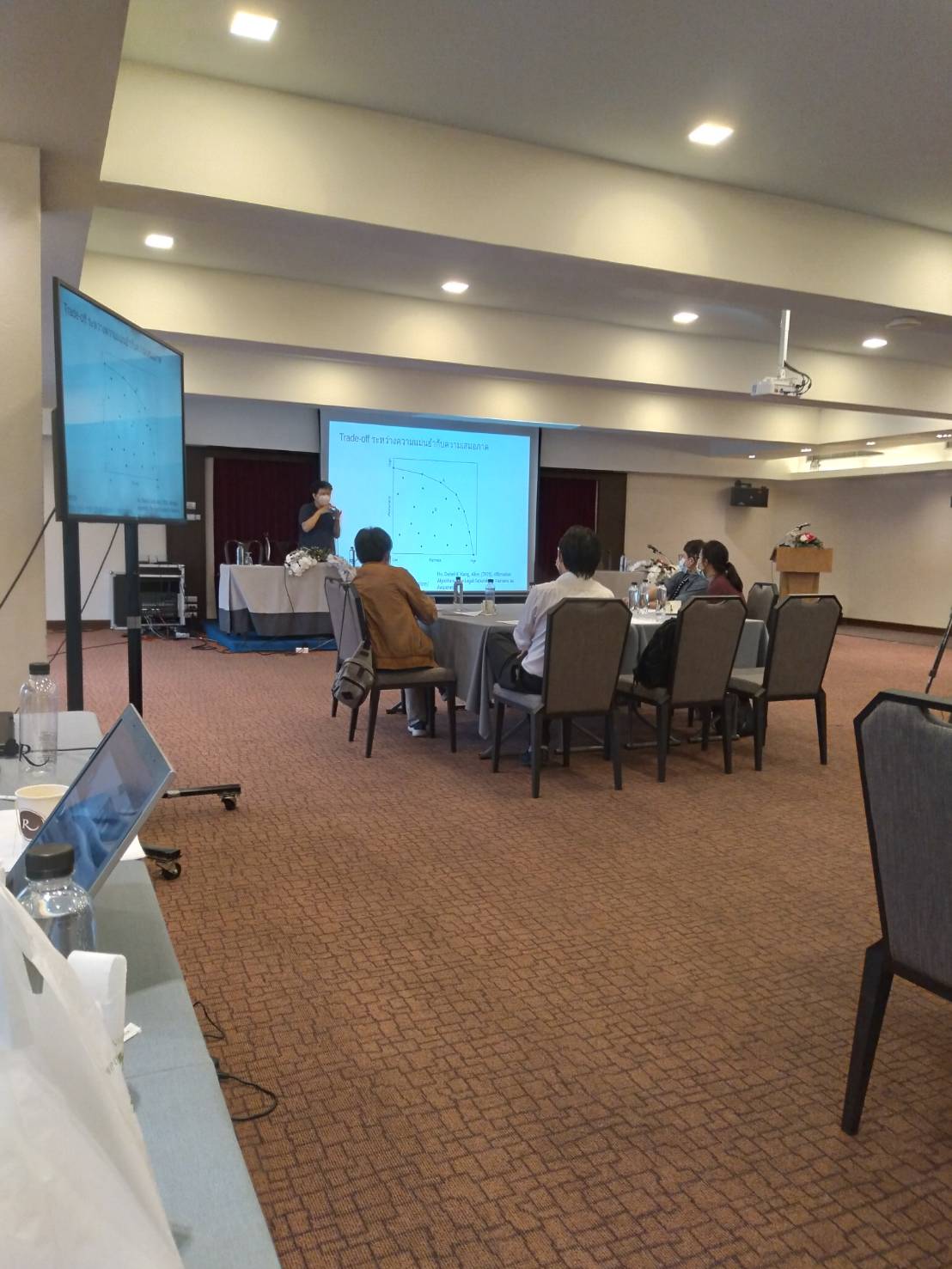
Afterwards, the actual workshop began, with a lead talk and discussion by Dr. Jittat Fakcharoenphol from the Department of Computer Engineering, Faculty of Engineering, Kasetsart University. Jittat talked about the basic concepts in machine learning, the core matter of today’s AI, and then he presented the group with three cases for them to discuss, all of which were concerned with feminist issues in various applications of AI. These were feminist issues in AI in medicine, in facial recognition, and in loan and hiring algorithms. The participants divided themselves into three groups; they then chose a topic and started to have their discussion very actively. After about an hour of group discussion, each group presented to others what they had discussed and what their recommendations were. The participants showed a strong interest in the topics and everyone was convinced that AI needed to become more socially aware and that more work needed to be done to see in detail what exactly socially aware AI is going to be.
At the end of the meeting, Dr. Supavadee talked about her reflection on the Workshop and gave a closing speech. The workshop in fact was the first one, to my knowledge, that was engaged with feminist topics in AI, and it was a credit to the IDRC and the Incubating Feminist AI project that a seed was planted in Thailand and in Southeast Asia regarding the awareness that we must consider how AI can contribute to a more equal and more inclusive society, and how the traditional unequal status of women, especially in this part of the world, could be redressed through this technology.
4th Asia Network Meeting – Incubating Feminist AI Project
Speaker: Jun-E Tan
May 30, 2022, 3pm Thailand time on Zoom
Dr Jun-E Tan is an independent researcher based in Malaysia, with her research interests broadly anchored in the areas of sustainable development, human rights, and digital communication. Her current focus is on artificial intelligence and human rights impacts within the context of Southeast Asia. Jun-E’s newest paper, ‘Digital Rights in Southeast Asia: Conceptual Framework and Movement Building’, was published in December 2019 by SHAPE-SEA in an open access book titled Exploring the Nexus Between Technologies and Human Rights: Opportunities and Challenges in Southeast Asia. More information on her research and projects can be found at her website – https://jun-etan.com/
Strong Girl AI Frameworks for the Empowered Mobility of Women in Southeast Asia
Hazel T. Biana, Department of Philosophy, and Southeast Asia Research Center and Hub, De La Salle University
Rosallia Domingo, Department of Philosophy, De La Sall University
When it comes to mobility, how can Artificial Intelligence (AI) further empower and protect the vulnerable, particularly women and girls in Southeast Asia?
Everyone is cordially invited.
Monday, May 2, 2022, 3 pm – 4.30 pm Bangkok time on Zoom
This call is released as part of thef<a+i>r feminist AI research network, supported by IDRC, in a three-year initiative to create new algorithmic and social science models that enhance social science and maching learning disciplines to intersect with core public policy agendas in the Global South. (SeeANNEX 2: Indicative Research Directions and Sectors) The project will a) call for expressions of interest (current – Phase 1); b) develop a new model for publication as a research paper (Phase 2); c) prototype (Phase 3); and d) pilot (Phase 4) applied feminist AI research and solutions to ensure that technology is co-created with problem definition and solution design of affected communities, and meets or exceeds the needs of the historically marginalized or vulnerable, especially women and girls.
The Center for Science, Technology, and Society and the F<A+i>r network have issued a call for research articles in the areas of Artificial Intelligence and gender equality in Southeast Asia. We welcome high-quality articles that focus on the issues of AI fairness, especially gender equality. Papers will be included as chapters in an edited book on Feminist AI in Southeast Asia.
Scholars and scientists working in computer science, philosophy, sociology, development studies, and related areas are welcome to submit their papers. Only scholars or scientists based in Southeast Asia are eligible.
Papers should be theoretical or policy-based in nature, and aim at suggesting ways in which AI can be used to promote gender equality and more inclusive society; papers focusing on the use and design of AI for the empowerment of women in Southeast Asia are especially welcome.
The grant for each successful paper is 30,000 Thai Baht. To apply, please send a concept note of no more than 1,200 words, consisting of the title, main question or challenge that the paper proposes to solve, a brief rationale for the main question, and a sketch of argument or methods proposed to solve the question.
Approved concept notes will be eligible for a 10,000 Baht first-round grant, and the author will be eligible for 20,000 Baht when they submit the final paper.
The deadline for submitting the concept note is January 31, 2022. And the deadline for submitting the full paper is May 31, 2022. Full papers should be between 6,500 to 8,500 words long. Papers and concept notes must be submitted in English.
Prospective authors should send their concept notes to enlightening123456@gmail.com. Other communications with the Center concerning this call should also be directed to this address.
The 2nd Network Meeting of the ASIA Region of the Incubating Feminist AI Project will take place from 4pm to 5.30pm on Monday, January 31, 2022. The meeting will feature linguist and computer scientist Attapol Thamrongrattanarit-Rutherford, who has done extensive research on natural language processing in Thai language. He will talk about gender bias in NLP, focusing on Thai language.
The “Incubating Feminist AI Project” aims at stimulating awareness, discussion, and research into the potentials of artificial intelligence in contributing to a more equitable and inclusive society. More information about the project can be found here.
The meeting will take place on Zoom. Those who are interested can register by clicking on this link.