Categories
Public Talk

Talk on Ethics of Broadband

Public Lecture

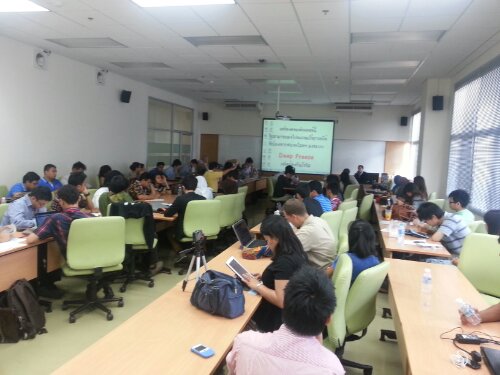
The Ethics of Broadband:  Optimizing the Impact of the Internet in Asia

Deepak Jain Hall, Sasa International House, Chulalongkorn University
October 17, 2019, 2pm to 4pm. Refreshments will be served afterward.

Speakers and Their Topics

Craig Warren Smith: “Operationalizing Broadband Ethics in the Era of 5G”

Shenglong HAN, “Envisioning Meaningful Broadband-China:  A Framework for Activating an Ethical Broadband Ecosystem for the World’s Largest Nation” 

Craig Warren Smith is Chairman of the Digital Divide Institute.  In 1999 he founded the international movement to close the digital divide.  After graduating with honors from Stanford University and the University of California-Berkeley, he became a professor of technology policy at Harvard’s Kennedy School of Government and also at the National University of Singapore’s Lee Kuan Yew School of Public Policy.   In  2007, he created an ethics-based paradigm called Meaningful Broadband. It was accepted that year by Thailand’s NBTC and it’s five telecommunications operators.  It has since been activated as a model for closing the Digital Divide by the Republic of  Indonesia. In 2019, this model was slated for deployment to 30 million low-income citizens located in remote parts of the archipelago.

Shenglong HAN, Ph.D. in management science, Associate Professor of the Department of Information Management at Peking University. Funded by Freeman Foundation of the USA, he visited University of Illinois at Urbana-Champaign as a visiting scholar from July 2008 to June 2009. From May 2012 to August 2015, he was sent by Confucius Institute Headquarters and Peking University to Thailand to act as the Chinese Director of the Confucius Institute at Chulalongkorn University. His current research interests focus on digital divide and community informatics.

Program

2.00-2.15 pm: Introducing the Program and the Speakers, setting the stage
Soraj Hongladarom, Director, Center for Ethics of Science and Technology

2.15 – 2.45 pm: “Operationalizing Broadband Ethics in the Era of 5G”
Craig Warren Smith

2.45 – 3.15 pm: “Envisioning Meaningful-Broadband China”
Han Shenglong

3.15 -4.00 pm: General Discussion

4.00 – 5.00 pm: Coffee and Refreshments Break, Networking

The public is cordially invited. Please register by sending an email to parkpume@gmail.com before October 15, 2019. Seating limited to 25 only.

Organized by the Center for Ethics of Science and Technology, Chulalongkorn University and the Digital Divide Institute, supported by the Mahachakri Foundation.

Categories
Uncategorized

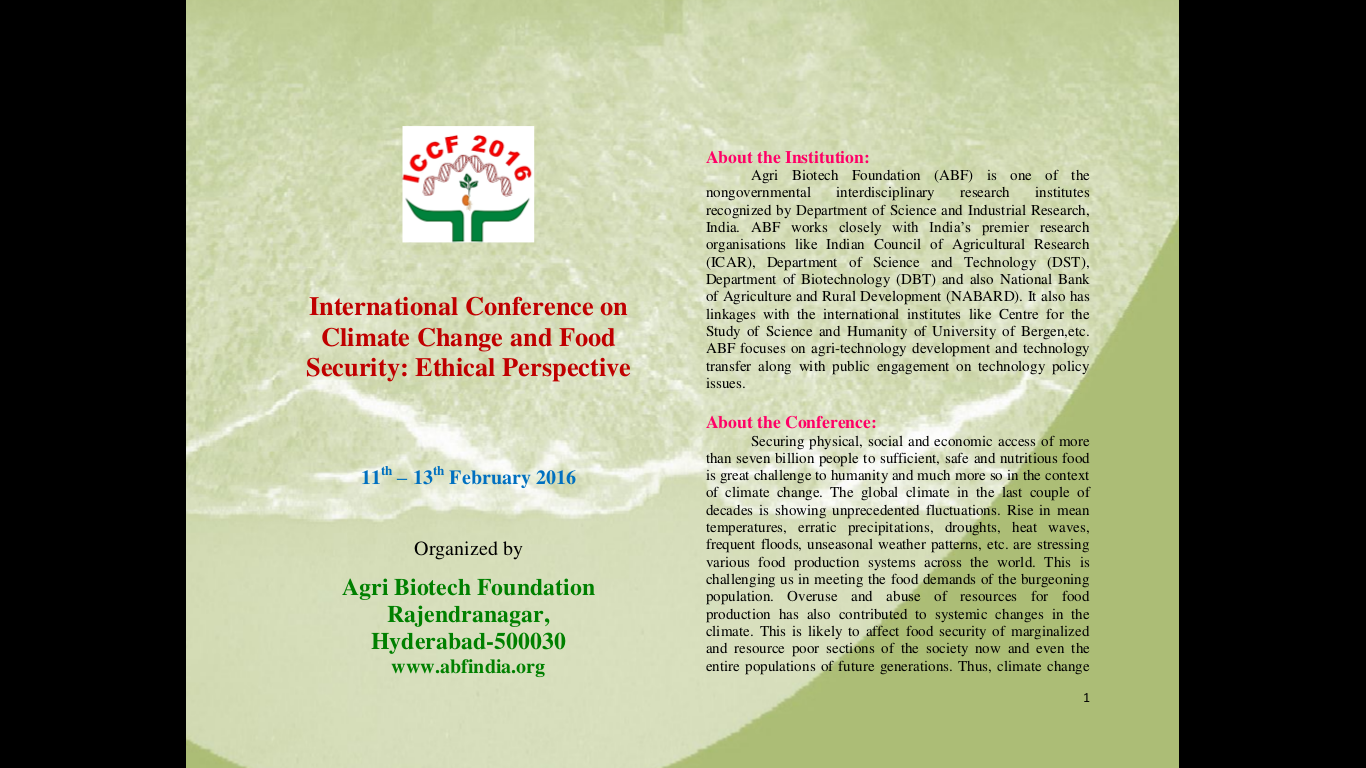
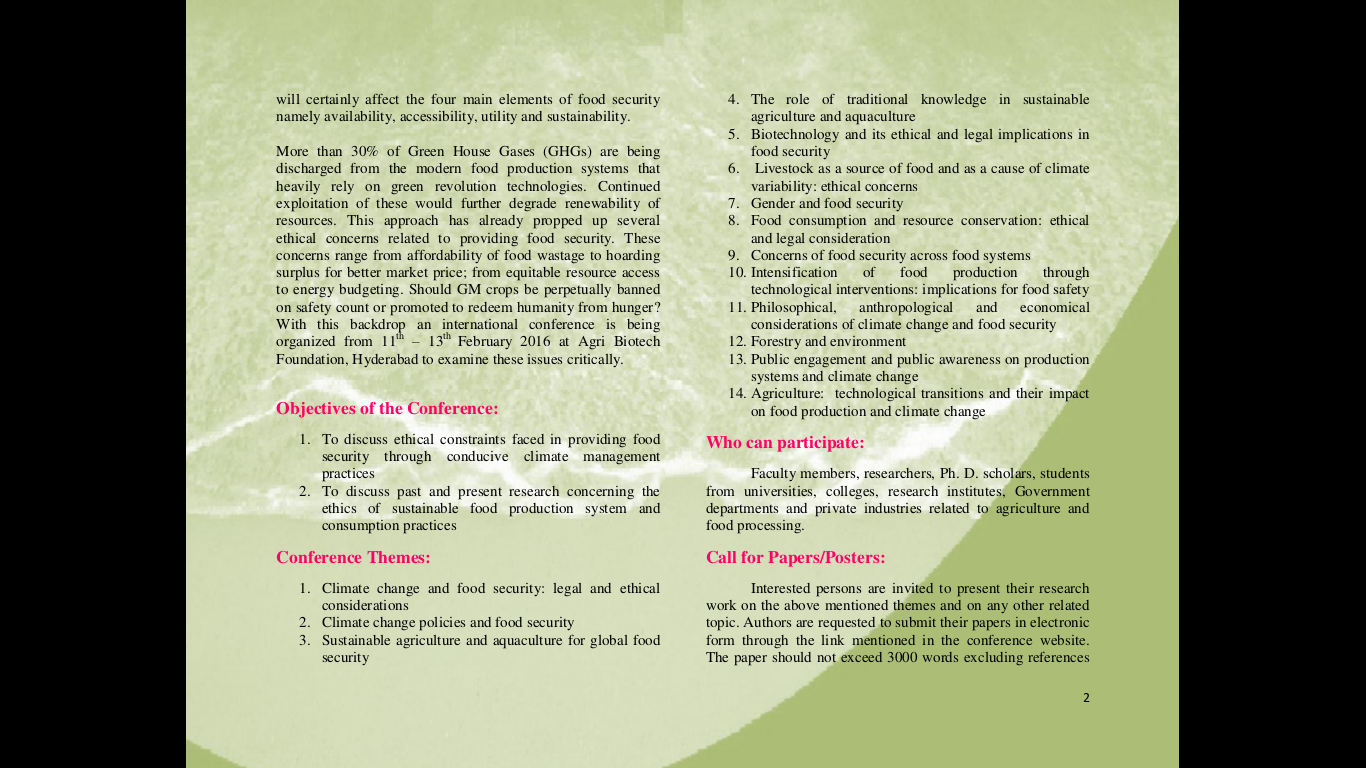
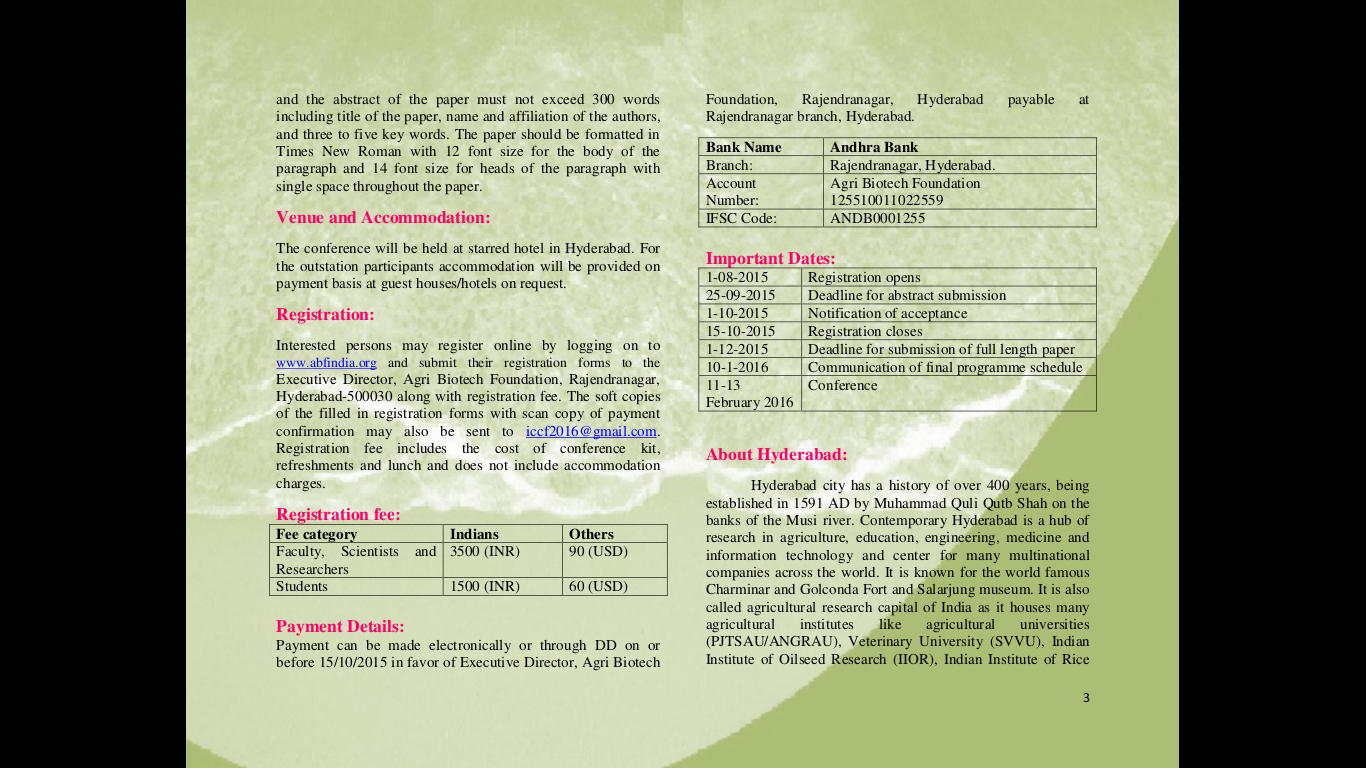
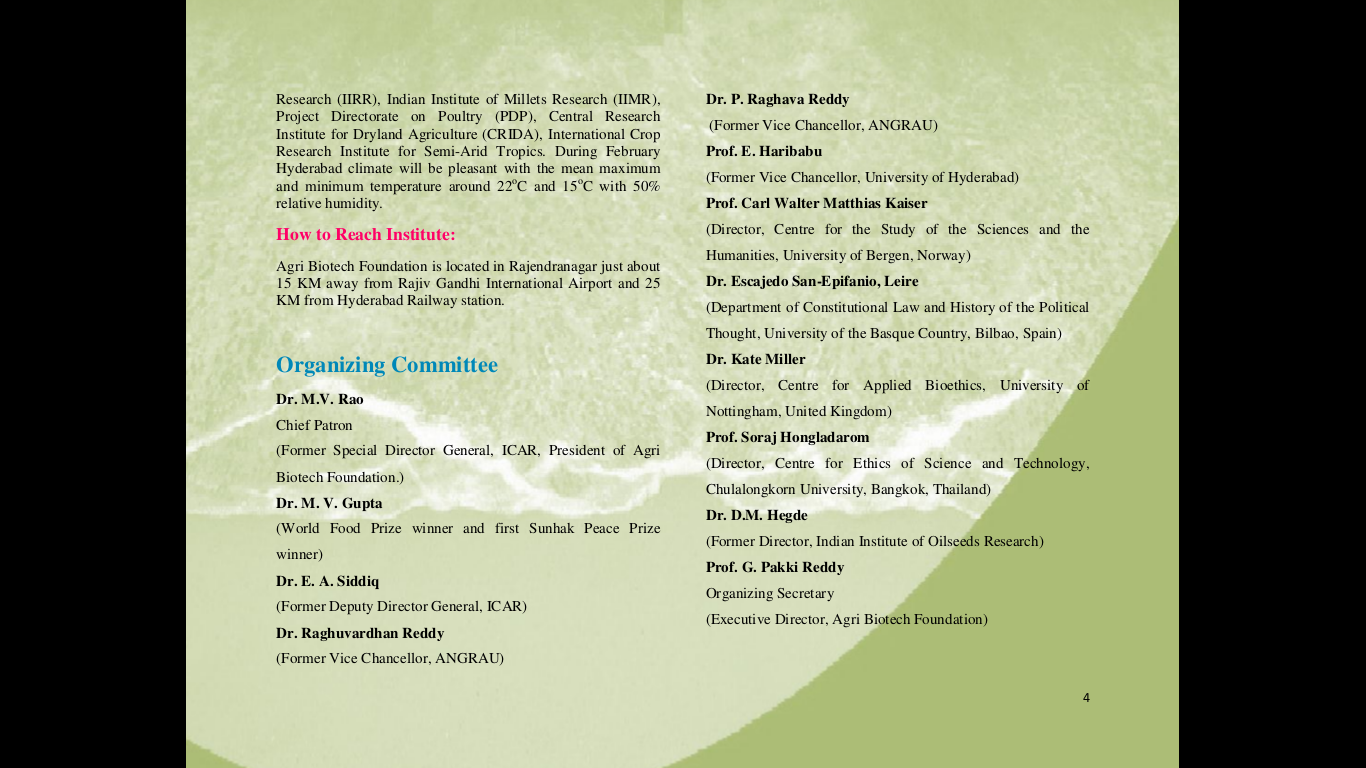
International Conference on Climate Change and Food Security: Ethical Perspectives

International Conference on Climate Change and Food Security: Ethical Perspectives, February 11-13, 2016, Hyderabad, India

Deadline of submission of abstract: September 25, 2015

For details please see inside.

This conference is the second international conference of the Asia-Pacific Society for Food and Agricultural Ethics (APSAFE), which organized its first conference at Chulalongkorn University in November, 2013.

For details please see the following pictures:

Screenshot from 2015-08-13 22:04:15

Screenshot from 2015-08-13 22:04:24

Screenshot from 2015-08-13 22:04:36

Screenshot from 2015-08-13 22:04:47

Or the whole file can be downloaded here –> ICCF Brochure latest

Categories
ethics Uncategorized

Buddhism, Economic Ethics and the Ideal World of Gift Economy

You are invited to a talk on:
“Buddhism, Economic Ethics and
the Ideal World of Gift Economy”

by
Karma Lekshe Tsomo
Department of Theology & Religious Studies,
University of San Diego, U.S.A.,

and

Ursula Oswald Spring
Regional Center for Multidisciplinary Research, National Autonomous
University of Mexico

With reflection by Soraj Hongladarom

Friday January 17, 2014 at 13.00 hr., 4th Floor Meeting Room
Social Research Institute, Wisid Prachuabmoh Building
Chulalongkorn University, BANGKOK

The global economy is on the brink of collapse, yet we continue to hear news of corporate buy-outs, multi-million-dollar bonuses, and chronic corruption. What’s the solution? In this talk, Karma Lekshe Tsomo examines the teachings of the Buddha to discover ethical guidelines for economic decision making. Beyond rules and restrictions, she will explore the fundamental principles that could be used to construct an economic system in an ideal world. Ursula Oswald Spring will then introduce the concept of gift economy which is generally a non-category in economics, she will make a reference to mothering as a unilateral free distribution of goods and services and as a means of creating human bonds. She will also give some clues on how the world of gift economy may be attained through visibilizing and mainstreaming matriarchal spirituality. The talk will then be followed by a reflection from Soraj Hongladarom.

Categories
ethics

Sixth Youth Peace Ambassador Workshop

image

This is a live picture of the workshop on “Ethics in Action” at Chulalongkorn University. It’s part of the Sixth Youth Peace Ambassador Training Program directed by Darryl Macer and organized by the Center.

Categories
ethical issues

Environmental Ethics and Energy Equity Beyond 2015

3 April 2013, 8:00-17:00
Venue: Room 601/17 Mahachakri Building, Chulalongkorn University, Bangkok, Thailand

Organised by: Center for Ethics of Science and Technology, Chulalongkorn University, Thailand; the International Peace and Development Ethics Centre, and Eubios Ethics Institute.

Draft Agenda*
3 April 2013

8:00-8:30    Registration
8:30-10:15        Opening Words
Dr. Soraj Hongladarom
Director, Center for Ethics of Science and Technology, Chulalongkorn University, Thailand

Opening Words and Setting the Themes of the Meeting
Prof. Darryl Macer, Director, International Peace and Development Ethics

Exporting Harm: the Ethics of Resources
Prof. Jeremy Moss
Director, Social Justice Initiative, University of Melbourne, Australia

General Discussion

10:15-10:30     Tea Break

Environmental Ethics for the Post 2015 World
Prof. Darryl Macer
Senior Visiting Research Fellow, United Nations University Institute of Advanced Studies, Yokohama, Japan

Philosophy and the Environmental Crisis
Dr. Napoleon Mabaquiao,
De La Salle University-Manila, Philippines

Nuclear Energy and Environmental Ethics: Post 2015
Dr. Ayoub Abu-Dayyeh,
President, Energy Conservation and Sustainable Environment, Jordan

12:00-13:00 Lunch will be provided

13:00-17:00    Our Future
Sense of Place: From Landscape to Ethicscape
Prof.  Marlon Patrick P. Lofredo
St. Paul University Quezon City, Philippines

Ethical aspects of setting research priorities in Climate Change and Environmental Policies
Mr. Alin Horj
Research Fellow, Eubios Ethics Institute, Thailand (Romania)

Intellectual Property Rights and Environmental Ethics
Dr. Soraj Hongladarom
Department of Philosophy, Faculty of Arts, Chulalongkorn University, Thailand

Eco-Fashion | Developing Sustainable Business through education
Mr. Enoc Armengol,
Director, PaloWood.com

Tea Break

Repository of Ethical World Views of Nature and World Views of Nature in Thailand
Ms. Napat Chaipraditkul
Research Fellow, Eubios Ethics Institute, Thailand

The Talang Mamak People’s Views on Nature
Ms. Ria Permana Sari
Indonesia; Asian Institute of Technology

World Views of Nature Among the Indigenous People of Brunei darussalam
Dk Mas Dino, bte Hj Radin Hanafi
Universiti Brunei darussalam

General Discussion

Concluding remarks by Dr. Darryl Macer and Dr. Soraj Hongladarom

The meeting will include active discussion on environmental ethics, sustainability and climate change issues and policies, recent publications of the UN, and what the research agenda should be in the future.

Registration Fee is payable in cash on the day, and includes lunch and two snacks:
Students: 500THB    Others: 2,000 THB

Participants will include policy makers, academics, business leaders, teachers, NGO members, concerned citizens, youth among others.

Please register and send information to ananya@eubios.info

Categories
Nanoethics

Social and Ethical Aspects of New and Emerging Technologies from an Asian Perspective – A Call for Papers

Call for Papers

Social and Ethical Aspects of New and Emerging Technologies from an Asian Perspective


Guest editor: Dr. Soraj Hongladarom, Chulalongkorn University, Bangkok.

The journal NanoEthics: Ethics for Technologies that Converge at the Nanoscale, published by Springer in the Netherlands, is planning a special issue for August 2012 on social and ethical aspects of new and emerging technologies from an Asian perspective. These technologies include nanotechnology, synthetic biology, neuroscience and information and communication technology. The perspective could be religious, cultural or related to problems unique to or especially important in, the Asian context.

Advances in nanotechnology naturally call for a sustained investigation on how the technology is related to its socio-cultural and normative contexts. Such investigation is inherently interdisciplinary and touches upon the ethical, sociological, legal, and other issues. Public attitudes toward the technology can have a tremendous impact on how the technology is carried forward and even on the direction of technological research and development itself. Furthermore, as Asia and other developing, non-Western regions are also embracing the technology, a sustained look at the ethical, cultural and social implications of nanotechnology in these regions would be very interesting. In addition, the added cultural dimensions present a set of challenges in itself, not least among which is how the ethical problems incurred by nanotechnology are shaped up by the cultural contexts and what kind of responses are there that arise from within the cultural roots and traditions of Asia as well as other non-western regions.

Papers are being called for a special issue of Nanoethics that address the issues outlined above. The following topics are suggested for the issue, though the list is not exhaustive:

  • Nanotechnology for development
  • Religious perspectives on nanotechnology
  • Human enhancement in Asian context
  • Nanotechnology policy in Asia
  • Nanotechnology policy in the developing world
  • Privacy in Asian culture
  • Issues in neuroethics through Asian perspectives

In fact, any contributions on any ethical and social aspects of these new technologies relevant to Asia or other non-western economies are welcome.

All papers will be double-blind refereed.

Important dates:

  • 29 August 2011: Call for Papers issued
  • 15 January 2012: Last day for notifying Guest Editor of intention to submit (extended!)
  • 15 February 2012: Papers due
  • March-April: Review process
  • May-July: Revisions where necessary
  • 15 July 2012: Final revised papers due
  • August 2012: Special issue published

Submission procedure:

Papers should be submitted online at http://www.springer.com/social+sciences/applied+ethics/journal/11569 (Please note that this applies to sending full papers only. Please send intentions to submit and discussions of proposed topics to the Guest Editor.)

Instructions for authors can also be found here.

Guest editor details:

Dr. Soraj Hongladarom

Department of Philosophy

Faculty of Arts, Chulalongkorn University

Bangkok 10330, Thailand

Tel. +66 (0) 2218 4756; Fax +66 (0) 2218 4755

Director, Center for Ethics of Science and Technology

Faculty of Arts, Chulalongkorn University

Email: hsoraj@chula.ac.th

http://www.stc.arts.chula.ac.th/

Categories
meaningful broadband

Ethics, Wellbeing and Meaningful Broadband

International Workshop

Ethics, Wellbeing and Meaningful Broadband

August 16 – 18, 2011

Chulalongkorn University

Introducing broadband to a country such as Thailand has faced a number of challenges. Many of these challenges are regulatory and political in nature. Many groups are vying for a lead position in the broadband game and no one wants to lose out. This has led to an impasse where nothing is moving. However, a brighter prospect appears to be on the horizon when a new law was passed recently setting up the National Broadcasting and Telecommunication Commission (NBTC) which has the responsibility and the authority to lay out regulatory framework for broadband network. Hence it seems that Thailand will have its own broadband network soon.

Nevertheless, a new set of challenges are emerging as a result of the introduction of the broadband network. When the physical infrastructure is there, these new challenges include how the network will be used to the best interest of the public as a whole. We have introduced the notion of “meaningful broadband” to refer specifically to these new challenges. How can broadband communication be “meaningful” in the sense that it responds to not only the demand for economic growth, but also the need to maintain the values and goals which are not so directly measurable? These values and goals comprise the meaningfulness of people’s lives. Meaningful values, for example, are present when the people do not become a mere cog in the giant economic wheel but retain their sense of purpose and direction that is ethically positive. Hence a number of questions and challenges emerges: How can broadband use be integrated into the traditional lives of the people so that it does not become a mere tool of the new seemingly all-powerful values of consumerism and globalized commercialization? How can broadband fit with and even promote the values that are meaningful to the people?

This is the rationale for the international workshop on “Ethics, Wellbeing and Meaningful Broadband.” A number of internationally recognized scholars have been invited to the workshop to share their viewpoints with leading Thai thinkers and members of the public to find ways to respond to the challenges of ethical and meaningful broadband use mentioned above. The workshop aims at answering the following questions:

1) How to operationalize “sufficiency economy”? The Thai constitution has a requirement for each Thai ministry and agency, including its regulatory agency, to further “sufficiency economy,” a principle laid out by the Thai king. The principle has affinities with the Bhutanese principle of “Gross National Happiness.” How is this requirement of either Sufficiency Economy and Gross National Happiness being operationalized? Of it is being ignored, why and which government agencies are innovating on this theme. As a new regulatory agency tied to the theme of digital convergence (linking broadcast and broadband), NBTC represent a new opportunity to position Sufficiency Economy as an overall driver of digital convergence strategies, integrated into the frequency allocation (spectrum management) and taxation strategies of the new regulator as well as establishing a new interface between regulation and “human development” which is a traditional concern of ministries such as public health, culture and education which have been totally isolated from telecommunications regulation.

2) How to pre-empt government censorship of the Internet? Recently political constituencies and governmental factions have furthered internet censorship in Thailand and in other Asian nations. This is particularly evident regarding online games, gambling, pornography, and (in particular countries), certain themes such as Lese Majeste, Singapore’s sensitivity to criticism, China’s sensitivity to human rights arguments, Arab countries sensitivity to protest movements fostered by the internet. Censorship is an example of “throwing the baby out with the bathwater” because exclusion of web sites via censorship often prevents a country from receiving benefits from internet-based learning in an effort to achieve specific goals and much internet censorship is ineffective and unenforceable for a variety of reasons. Nonetheless we can expect censorship to continue and grow unless “national broadband ecosystems” emerge that that are meaningful to citizens and nations. In particular, needs of vulnerable citizens (the poor, the uneducated, young children) must be protected. What can be done in the design and regulation of new technologies to attracted ethically valuable applications technology and discourage negative impacts? What can be learned by the effort to develop “quality of life indexes,” e.g. those underlying Bhutan’s Gross National Happiness (GNH), to provide objective measures of technologies that enable policymakers to exclude or attract certain technologies based on their anticipated ethical impacts?

3) Rethinking “media ethics” for the broadband era: What is the track record of “media ethics” strategies to limit harm from television and encourage voluntary compliance by Hollywood or music-makers? What has/hasn’t worked in influencing behavior by large number of users, e.g. young children? What are the obstacles that have prevented better success of media ethics strategies? Now that the broadband era is introducing multimedia convergence how is the media ethics field changing? What new opportunities and challenges is it facing. What can be learn from South Korea and other broadband-saturated nations? How to effectively integrate media ethics considerations into broadband policies before a nation embarks upon its broadband-enabled transformation?

4) Predicting the ethical impacts of broadband: What are the best methods for scenario construction, forecasting and prediction of the ethical impacts of broadband? How can a “wellbeing society” be visualized and construction that involves broadband use? How can broadband contribute to wellbeing? How are the ethical impacts in poor uneducated countries different from advanced highly educated nations?

5) Technological determinism vs. human intervention: What are current views regarding the philosophical concept of technological determinism? What is the origin and development of this concept and what do we know from empirical research on this theme — from Pythagoras to Heidegger to McLuhan? What are the technologically deterministic viewpoints that now dominate the broadband era — and what corporate or governmental interests sustain these viewpoints? What opportunities exist to alter the course of next-generation broadband-enabled technologies in order to ameliorate their ethical impacts?

Registration

The public is invited to attend. However, space is limited. Please register with Mr. Parkpume Vanichaka at parkpume@gmail.com by July 31, 2011. Registered participants are invited for the luncheon before the main event on August 16. There are no registration fees.

Language

The workshop will be conducted both in English and Thai, and there will be simultaneous interpretation services.

Schedule

Workshop on “Ethics, Wellbeing and Meaningful Broadband”

Room 105, Maha Chulalongkorn Building, Chulalongkorn University

August 16, 2011

11.45 Lunch and Registration

13.00 “The Second Wireless Revolution: Bringing Meaningful Broadband to the Next Two Billion,” Craig W. Smith

14.00 “Content Regulations in the Broadband Era: Incentives and Disincentives Based Approach to Content Regulations,” by Akarapon Kongchanagul

14.45 “The Seven Habits of Highly Meaningful Broadband,” Arthit Suriyawongkul

15.30 Break

15.45 “The Anonymous Group: A Look at Online Rebel,” Poomjit Siriwongprasert

16.30 “Give Them the Tools, Get Out of the Way: the Liberisation of Communication and its Consequences,” Nares Damrongchai

17.15 Closes

August 17, 2011

8.30 Registration

9.00 Keynote Lecture, “Ironies of Interdependence: Some Reflections on ICT and Equity in Global Context,” Peter Hershock, East-West Center, USA

10.00 “Toward a Well-being Society Scenario,” Hans van Willenswaard

10.45 Break

11.00 “From Veblen to Zuckerberg: Past, Present, and Future of Techno-Determinism in Thailand,” Pun-arj Chairatana

11.45 Lunch

13.00 “Computer Technology for the Well-Being of the Elderly and People with Disabilities,” by Proadpran Punyabukkana

13.45 “Meaningfulness, IT and the Elderly,” Soraj Hongladarom

14.30 Mini-break

14.40 “Media and Information Literacy (MIL): the Move beyond Broadband Access,”Kasititorn Pooparadai

15.25 Break

15.40 “Right Speech VS. Free speech: Buddhist Perspective and Meaningful Broadband,”Supinya Klangnarong

16.25 “From Meaningful Broadband to Open Infrastructures and Peer Economies,” Michel Bauwens

17.10 General Discussion – Where do we go from now?

17.30 Workshop closes.

18.00 Dinner (place to be announced later)

August 18, 2011

9.00 – 16.00 Workshop on “Meaningful Broadband Research Consortium,” organized by Craig W. Smith

Categories
meaningful broadband

Meaningful Broadband Ethics

The PowerPoint file of the talk on “Meaningful Broadband Ethics” given by Dr. Soraj Hongladarom at a meeting on Meaningful Broadband Policy at Faculty of Arts, Chulalongkorn University a few months ago can be downloaded now. Please click here.

Categories
meaningful broadband

Article on Meaningful Broadband

‘Meaningful’ broadband policy sought
By Asina Pornwasin
The Nation

The National Telecommunications Commission (NTC) and the Digital Divide Institute of Chulalongkorn University’s Faculty of Arts have jointly proposed guidelines for the creation of a broadband policy which they say should have a meaningful impact on Thai society.

The proposal is a result of two years’ work by the university’s Meaningful Broadband Working Group to develop a framework, or research agenda, from which a broadband roadmap can be developed. It has proposed the creation of innovations in five domains and integrating them into a coherent model.

NTC chairman Prasit Prapinmongkolkarn said broadband policy was an outcome of integrating governmental policy with industry policy, a regulatory framework and public-private partnerships in rolling out meaningful applications and services for broadband.

“After years of postponement, Thai policy-makers are now rapidly formulating plans for bringing broadband to all Thais. Mobile broadband is a strategically important solution, in addition to implementing broadband access in the form of fixed optical fibre to the home. Now, 3G is finally on its way [with a licence auction later this month]. The challenge is to leverage the licensing of broadband to make sure all Thais benefit from it,” Prasit said.

To make national broadband policy effective, innovative elements are required from five “domains”, labelled governmental, technology, management, ethics and financial, Prasit said. Then, these innovative elements must be integrated into a coherent model.

He said the governmental innovation should find the right link between the regulatory policies of the NTC and the public policies of the Cabinet. The government must also consider how to use instruments such as tax abatement, public-private partnerships, public-private actions and state-owned enterprises to lessen risks and increase rewards for companies that introduce useful broadband services.

In the technology domain, the government should find technologies, including software, devices and last-mile solutions, to activate broadband demands in Thailand.

“The government should encourage academic talent to develop software and solutions to make broadband services usable and affordable for all Thai people,” he said.

However, collaboration between the government and academics is not enough. The government should invite private-sector organisations to bring broadband access to the masses, especially upcountry. To effectively execute these things, a management model is required, and private-sector companies are expert in these matters, he said.

The Meaningful Broadband Working Group has also suggested that the government should be concerned about the downside of broadband.

Prasit said Chulalongkorn University’s Centre of Ethics in Science and Technology was currently formulating a research tool called a “meaningful technologies index”. It is an attempt to measure the difference between “good” and “bad” impacts of broadband.

“The government should not only focus on the social and economic benefits of broadband, but also the harm that broadband technologies bring, such as the risk of online-game addiction. This is one problem that could result if broadband deployment is not meaningful,” he said.

Finally, the government should initiate studies to determine the best financial model for making broadband access meaningful for all stakeholders.

http://www.nationmultimedia.com/home/2010/09/07/technology/-Meaningful-broadband-policy-sought-30137441.html

Categories
conference

มิติทางสังคมและจริยธรรมของเทคโนโลยีสารสนเทศ

การประชุมวิชาการ “มิติทางสังคมและจริยธรรมของเทคโนโลยีสารสนเทศ”
ห้อง 105 อาคารมหาจุฬาลงกรณ์ จุฬาลงกรณ์มหาวิทยาลัย

15 กรกฎาคม พ.ศ. 2552
******************************

กำหนดการ

8:45 – 9:00     พิธีเปิด
9:00 – 9:45     “พระพุทธศาสนากับเทคโนโลยีสารสนเทศ”
ศ. ดร. สมภาร พรมทา

9:45 – 10:15    พัก

10:15 – 11:00     “Blogging and Thai Society: Unleashing Potentials and Perils in a Troubling Democracy”
ผศ. ดร. พิรงรอง รณะนันทน์

11:00 – 11:45    “Impacts of the Social Network in Thai Society”
ผศ. ดร. ภัทรสินี ภัทรโกศล

11:45 – 12:30    “The Philosophy of Creative Commons and Open Source Movement”
รศ. ดร. โสรัจจ์ หงศ์ลดารมภ์

12:30 – 13:30     อาหารกลางวัน

13:30 – 14:15     “Information Technology and the Threat towards a Surveillance Society in European Countries: Some Lessons for Thailand?”
ผศ. ดร. กฤษณา กิติยาดิศัย

14:15 – 15:00     “การรู้เท่าทันสังคมใหม่ในโลกอินเทอร์เน็ต”
ผศ. ดร. ดวงกมล ชาติประเสริฐ

15:00 – 15:30     “How Data Can Survive Over the Internet World”
นายวศิน สุทธฉายา

15:30 – 16:00     พัก

16:00 – 16:30     “Web 2.0 กับการสื่อสารทางการเมือง : จากแนวคิดสู่หลักฐานเชิงประจักษ์”
นางสาวพิมลพรรณ ไชยนันท์

16:30 – 17:15     อภิปรายทั่วไป

*ไม่เก็บค่าลงทะเบียน*

การบรรยายทั้งหมดเป็นภาษาไทย

รายละเอียดจะแจ้งให้ทราบเป็นระยะๆ