Categories
Uncategorized

Program of the 29th PARST Conference

December 19-20, 2025

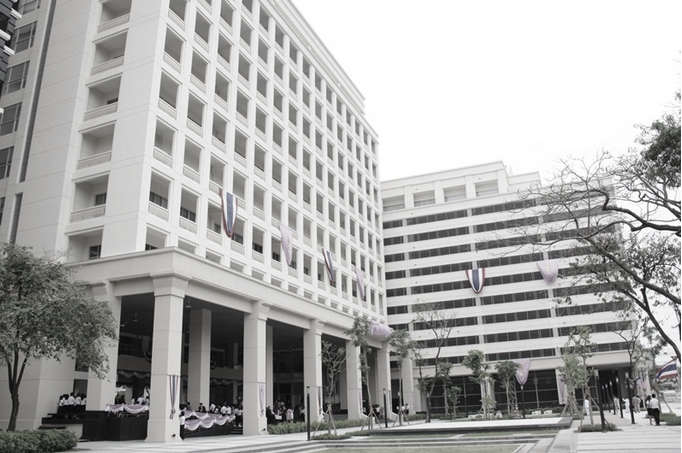
Mahachakri Building, Faculty of Arts, Chulalongkorn University
Friday, December 19, 2025

Morning Session

Room 401/5

9:00 – 9:15   Opening Ceremony

Award Presentation Ceremony to students who won the National Philosophy Olympiad and represented Thailand at the International Philosophy Olympiad

9:15 – 10:15Keynote Lecture: “Distributive Justice and Animals,” Paula Casal (Law Department, ICREA & Pompeu Fabra University, Barcelona)

10:15 – 10:45 Coffee Break

Paper Presentations, Morning Session

Room 401/5

10:45 – 11:15  Jeremiah Joven Joaquin “Ricardo R. Pascual’s Partyless Democracy”

11:15 – 11:45  Jiani Zhong “Free Will as An Essentially Contested Concept”

11:45 – 12:15 Fatiha Bouzid “The Covenant of the Machine: Founding Artificial Intelligence on Principles of Religious and Philosophical Wisdom”

Room 401/8

10:45 – 11:15 Yannick Essengue Amougou “The topic of Vitalism: African philosophy and religion as a being-with”

11:15 – 11:45 Benjamin Ivry “Novelizing Political Equality: Rereading the Political Philosophy and Fiction of Benjamin Constant”

11:45 – 12:15 Henry H Vumjou “Publicity as a Safeguard for Equal Political Freedom”

12:15 – 13:00 Lunch

Afternoon Session

Paper Presentations, Afternoon Session

Room 401/5

13:00 – 13:30 Hazel Biana “Rethinking Feminist Solidarity in the Age of Intersectional Crises”

13:30 – 14:00 Sira Nukulkit “Exogenous Distribution and Distributive Justice: From Rawls to Sen and Back to Sraffa”

14:00 – 14:30 Dyuti Ghosh “Co-cognition and Co-operation: a methodological journey towards a greater “Us””

15:00 – 15:20 Coffee Break

15:20 – 15:50 John Gould “Thomas Muntzer and the Apocalypse of the Self”

15:50 – 16:20 Leif Thomas Olsen “The Citizen Lobby from Capacity to Influence”

16:20 – 16:50 Lucas Scripter “Arboreal Atmospheres in Urban Spaces: Reflections on Hong Kong’s Banyans”

Room 401/8

13:00 – 13:30 Yuval Jobani “Women of the Wall: Navigating Religion in the Public Sphere”

13:30 – 14:00 Mohammad Mahdi Fallah “Foundations for a Just Polity: Political Equality and Social Justice in the Thought of Morteḍā Moṭahharī”

14:00 – 14:30 Maciej Czerkawski “Being Is Not a Non-Universal Kind: Rethinking the Ontological Difference”

14:30 – 15:00 Shane Ryan “Epistemic Environments and Distributive Justice”

15:00 – 15:20 Coffee Break

15:20 – 15:50 Kristine Ann C. Alcazar “Production of New Realities: A Foucauldian Examination of AI Governance in the Philippines”

15:50 – 16:20 Francesco Menichetti “Being-with-one-another: The ontological foundation of democracy in Jean-Luc Nancy”

16:20 – 16:50 ประชุมใหญ่สามัญประจำปี สมาคมปรัชญาและศาสนาแห่งประเทศไทย และพิธีปิด – General Assembly of the Philosophy and Religion Society of Thailand, and Closing Ceremony

Saturday, December 20, 2025

Morning Session

Room 401/5

9.00 – 13:00  Plenary Panel: “Political Equality and Political Philosophy,” convened by Prach Panchakunathorn, Department of Philosophy, Stanford University

Program

9.00 – 9.45 Kasper Lippert-Rasmussen (Aarhus), “Discrimination by Classification”

9.45 – 10.30 Tom Parr (Warwick), “Markets, Firms, and the Gender Pay Gap”

10.30 – 10.45 Coffee Break

10.45 – 11.30 Areti Theofilopoulou (Warwick), “”Why Didn’t She Leave?” Control without Coercion”

11.30 – 12.15 Andrew Williams (ICREA & Pompeu Fabra University, Barcelona), “Why I Am Not A Republican”

12.15 – 13.00 Prach Panchakunathorn (Warwick), “Rescues and Public Cost-Sharing”

13:00 – 14:00 Lunch

Afternoon Session

Paper Presentations, Afternoon Session

Room 401/5

14:00 – 14:30 Leo Deng “Sartre, Equality, and the Existential Dialectic”

15:00 – 15:30 Veronica Cibotaru “Is there computational creativity?”

15:30 – 16:00 Rituparna Roy, Paula Silva “Words Without Knowledge: Augustine in the Era of LLM”

16:00 – 16:15 Coffee Break

16:15 – 16:45 Lorraine K C Yeung and Daisy Pui Lun Chow “I wish I don’t have to depend on it, but…”: Moral oscillation amidst embracing ChatGPT in higher education”

16:45 – 17:15 Jesse Lewis Hill “Don’t say farewell to the modal theory of luck: A reply to He”

Room 401/8

14:00 – 14:30 Meha Mishra “Revisiting Arjuna’s Dilemma through Deontic Lens”

14:30 – 15:00 Rajat Pal “The Relationship Between Divine Authorship and Vedic Texts: A Critical Analysis of the Nyāya School’s Arguments Against the Mīmāṁsā School”

15:00 – 15:30 Julien Paret “I Will Always Be Against: Egor Letov’s Ontological Nothingness and the Political Equality of Rebellion”

15:30 – 16:00 Jordan Scott “Racism: Not a System, Not an Ideology”

16:00 – 16:15 Coffee Break

16:15 – 16:45 Prasenjit Biswas “Acts of Forgiving: Arguing for Decolonial Pluralism of Justice and Guilt”

16:45 – 17:15 Ionut Untea “Translation, Pro-existence and Sensus Communis as Incentives towards the Political”

Room 401/11 Papers in Thai Language

14.00 – 14:30  ณัฏฐพล บุณยพิพัฒน์ “มองเตสกิเออในปรัชญาทางการเมือง: สรุปและวิพากษ์”

14:30 – 15:00  ภัทรพล เป็งวัฒน์ “ทะลายกรอบคิดความเป็นชาย: อ่านภาพยนตร์ The Stones: พระแท้ คนเก๊ ผ่านเลนส์สตรีนิยมหลังมนุษยนิยม”

15:00 – 15:30  ณัฏฐพล ปราบริปู “ปัญหาความไม่เท่าเทียมกันผ่านสิทธิในทัศนะของอาเธอร์ โชเปนเฮาเออร์”

15.30 – 15.45  พักน้ำชา กาแฟ อาหารว่าง – Coffee Break

15:45 – 16:15  Angela Pangthipampai “จากรัฐถึงศาสนา: ความเหลื่อมล้ำของวิถีชีวิตแม่ชีไทย”

16:15 – 16:45  ทชากร กอกเผือก “การแปรสถานะภาพจากนักเรียนสู่ประชาชน ผ่านการตีความภาพยนตร์ เรื่อง From Up on Poppy Hill (ร่ำร้องขอปาฏิหาริย์)”

16:45 – 17:15  ธรรมชาติ อุดมทองสกุล “วิเคราะห์วรรณกรรมเรื่องแอนิมอลฟาร์มผ่านแนวคิดของคาร์ล มาร์กซ์”

17:15 – 17:45  กฤตภาศ ศักดิษฐานนท์ “ข้อโต้แย้งต่อแนวคิดของมาเคียเวลลีเรื่องการปกครองด้วยความกลัว”

17.45 Room 401/5 – Closing 

Registration

Registration fees for paper presenters: 1,200 Baht, payable in cash only at the conference site

Fees for non-paper presenting audience: 500 Baht, payable in cash only at the conference site

Categories
philosophy

Call for Chapters

Book Project on

Love and Friendship across Cultures

The Philosophy and Religion Society of Thailand and the Philosophical Association of the Philippines are collaborating to publish a book volume entitled “Love and Friendship Across Cultures” to be published by Springer. The book volume contains some of the papers that were presented during the First Joint Meeting of the two associations in July 2019. However, we plan to include more papers through this general call for chapters too.

Papers can be submitted for consideration of inclusion in the book provided that they deal with love and friendship in a cross-cultural dimension in one way or another. Chapters that deal with love and friendship (or only one of the two) from an Asian or from a religious perspective (Buddhist, Christian, Islamic, and so on), or those that focus on comparative aspects (for example, between Buddhist and Greek traditions, and so on) are particularly welcome. Papers need to be philosophically rigorous and meet the standard of internationally accepted scholarship.

Papers should be between 5,000 to 8,000 words and please follow the APA citation format. Please also submit an abstract of 200 words together with the paper. Deadline for submitting the paper is December 31, 2019. Please send the paper to me at soraj.h@mso.chula.edu and in the email please put the phrase “[Book Project – Love]” in the subject heading so that I can easily distinguish your submission from all other mails. Only papers in .doc, .docx, or .odt format are allowed.

Categories
conference

Love and Friendship across Cultures – Philosophy Meeting

The First Joint Meeting of the Philosophy and Religion Society of Thailand, and the Philosophical Association of the Philippines

“Love and Friendship across Cultures”

July 26-27, 2019

Chulalongkorn University, Bangkok, Thailand

Call for Papers

The Philosophy and Religion Society of Thailand (PARST) and the Philosophical Association of the Philippines (PAP) have agreed to organize a joint meeting for the first time at Chulalongkorn University in Bangkok, Thailand from July 26 to 27, 2019. The meeting will provide an opportunity for philosophers and scholars of related field to share their ideas and research findings which will lead to further networking, improvement of research and teaching quality, as well as opening up opportunities for more outreaching activities to the general public.

Papers are being called for the Joint Meeting. The theme of the Joint Meeting is “Love and Friendship across Cultures”. Papers within this broad topic will be considered; however, papers in any field within philosophy itself are in fact eligible. Papers should be between 3,000 to 6,000 words long, including footnotes and list of works cited, and they should follow the Chicago style of citation. Papers selected for presentation at the Joint Meeting will be selected again for publication either in the Journal of the Philosophy and Religion Society of Thailand or the Journal of the Philosophical Association of the Philippines.

Keynote Speakers

Suwanna Satha-anand

Pankaj Jain

Important Dates

Deadline for submission of papers: May 31, 2019

Notification to authors: Before June 20, 2019

Joint Meeting: July 26-27, 2019

Registration

Members of the PARST and the PAP: 1,000 Baht

Non-members: 1,200 Baht

Registration fees need to be paid in full and in cash at the conference site at the time of the conference. Registration fees include conference material, lunches and coffee break.

Members of the PARST should send their papers to Dr. Pagorn Singsuriya, email: pagorn.sin@gmail.com. Members of the PAP should send their papers to Dr. Jeremiah Joven Joaquin, email: jeremiah.joaquin@dlsu.edu.ph. Non-members can choose to send their papers to either places, but cannot submit their papers to more than one place at one time.   


Categories
conference

Joint International Conference

The First Joint Meeting of the Philosophy and Religion Society of Thailand, and the Philosophical Association of the Philippines

“Love and Friendship across Cultures”

July 26-27, 2019

Chulalongkorn University, Bangkok, Thailand

Call for Papers

The Philosophy and Religion Society of Thailand (PARST) and the Philosophical Association of the Philippines (PAP) have agreed to organize a joint meeting for the first time at Chulalongkorn University in Bangkok, Thailand from July 26 to 27, 2019. The meeting will provide an opportunity for philosophers and scholars of related field to share their ideas and research findings which will lead to further networking, improvement of research and teaching quality, as well as opening up opportunities for more outreaching activities to the general public.

Papers are being called for the Joint Meeting. The theme of the Joint Meeting is “Love and Friendship across Cultures”. Papers within this broad topic will be considered; however, papers in any field within philosophy itself are in fact eligible. Papers should be between 3,000 to 6,000 words long, including footnotes and list of works cited, and they should follow the Chicago style of citation. Papers selected for presentation at the Joint Meeting will be selected again for publication either in the Journal of the Philosophy and Religion Society of Thailand or the Journal of the Philosophical Association of the Philippines.

Important Dates

Deadline for submission of papers: May 31, 2019

Notification to authors: Before June 20, 2019

Joint Meeting: July 26-27, 2019

Registration

Members of the PARST and the PAP: 1,000 Baht

Non-members: 1,200 Baht

Registration fees need to be paid in full and in cash at the conference site at the time of the conference. Registration fees include conference material, lunches and coffee break.

Members of the PARST should send their papers to Dr. Pagorn Singsuriya, email: pagorn.sin@gmail.com. Members of the PAP should send their papers to Dr. Jeremiah Joven Joaquin, email: jeremiah.joaquin@dlsu.edu.ph. Non-members can choose to send their papers to either places, but cannot submit their papers to more than one place at one time.


Categories
conference Uncategorized

Call for Papers – Meeting of the PARST

Call for Papers
Annual Meeting of the Philososphy and Religion Society of Thailand

This year’s annual meeting of the Philosophy and Religion Society of Thailand will be held at the campus of Mahachulalongkornrajavidyalaya University, Khon Kaen campus, Khon Kaen, Thailand, on December 15 to 16, 2018.

http://kk.mcu.ac.th/

The theme of the conference this year is “Philosophy and Religion in the Thai Education System: Myths and Realities”.

Papers do not have to be directly related to the theme of the conference, but they need to be within either philosophy or religion. Each submitted paper will be reviewed by a selection committee to be set up by the Society.

Papers must be no more than 10 A4 pages long, including all notes and references, and they can be written in either English or Thai.

The last day for submitting papers is November 15, 2017. Those who submitted papers will be notified of the result by November 30.

Papers presented at the annual meeting will then again be selected for possible publication in the Journal of the Society.

Contact person: Jerd Bandasak at parstthailand@gmail.com

Categories
conference

Annual Meeting – Philosophy and Religion Society of Thailand

Call for Papers

The Philosophy and Religion Society of Thailand is organizing its 20th annual conference at Faculty of Arts, Silpakorn University, Nakorn Pathom on January 6-7, 2016. The theme of the meeting is “Aesthetics and Ethics in the Contemporary World.”

The Society is pleased to announce a call for papers for the conference. Papers can be in the theme of the conference, or in any topics in philosophy, religious studies, or related fields. All submitted papers will be peer-reviewed, and accepted papers will be announced one month after the deadline of submission.

Important Dates

October 10 Last day of submission of papers for consideration
November 10 Announcement of accepted papers
December 10 Last day of submission of revised papers

January 6 – 7, 2016 Annual Meeting

Papers are accepted in either Thai or English language. The length must be no more than 12 A4 pages inclusive of footnotes and references. The font is Times New Roman, 12 points.

In addition to the paper, please include an abstract of no more than half a page with your paper.

Please send the paper to Dr. Pagorn Singsuriya at pagorn.sin AT mahidol.ac.th. For more information please go to http://www.parst.or.th/

Categories
conference

Call for Papers

AP-CAP’10

October 1-2, 2010

( http://www.ia-cap.org/ap-cap10 )
Wellington Institute of Technology, Petone, Wellington, New Zealand
Conference Chair : Soraj Hongladarom
Local Chair : Steve McKinlay

The Asia-Pacific Computing and Philosophy Conference 2010 (AP-CAP 2010) will be held on the campus of Wellington Institute of Technology (WelTec), Petone, Wellington, New Zealand.  AP-CAP 2010 is part of a series of conferences organised by the International Association for Computing and Philosophy. CAP conferences are interdisciplinary by their very nature; we therefore welcome the submission of papers from a wide variety of disciplines at the intersection of philosophy, computer science and information technology as well as related areas in the social sciences.

Keynote Speakers
To be confirmed shortly.

Research Tracks
Whilst there is no specific theme for the conference papers are invited which explore the following ideas and their related disciplines.

  • Information and Computer Ethics
  • Identity, Trust and the Social Networking Phenomenon
  • Virtual Environments
  • Computing, Culture and Society
  • Computer-based Education and Electronic Pedagogy
  • Computational and related Logics
  • Metaphysics (Ontology, etc.)
  • Artificial Intelligence, Mechatronics, Robotics and Autonomous Agents
  • Philosophy of Computer Science
  • Philosophy of Information and Information Technology
  • Intersections

Please note that the above list should not be a limiting factor.

Submissions
Electronic submissions will open shortly.  A link will be provided from the conference website.  IA-CAP is moving towards full paper submissions however please limit submission length to 3000 words and include a 250 word abstract.  IACAP discourages participants from reading their papers to the audience.  The use of PowerPoint or other presentation software is popular.  However, these need not be submitted with your original paper.
Post graduate students (PhD and Masters) are especially encouraged to submit.

AP-CAP’10  Conference Website
http://www.ia-cap.org/ap-cap10

Important Dates

February 2010 Call for papers announced
April 1 Paper submission open
July 16 Deadline for paper submission
August 14 Paper acceptance notification
August 31 Early registration open
October 1 – 2 AP-CAP’10 Conference, WelTec, Wellington, NZ

Questions and Enquiries
Questions  concerning AP-CAP’10 may be addressed to the following;
Soraj Hongladarom  s.hongladarom@gmail.com
Steve McKinlay   stevet.mckinlay@gmail.com

Follow us on Twitter

http://twitter.com/AP_CAP2010

Categories
conference

Call for Papers

Asia-Pacific Computing and Philosophy 2009 will be held on October
1st-2nd, 2009 in Tokyo, Japan. The conference will be hosted at the
University of Tokyo’s Sanjo Conference Hall. Keynotes speeches will be
given by Professor Hiroshi Ishiguro (Osaka University) and Professor
Shinsuke Shimojo (Caltech). This year AP-CAP 2009 will be held in
conjunction with the Devices that Alter Perception workshop, which
will form a special track.

The conference invites papers from philosophy, computer science,
robotics, and media arts. Practitioners of these and related fields
like artificial intelligence, ethics, human-computer interaction, and
society-technology studies will debate and demonstrate new research.
The conference will foster a scholarly dialogue between designers and
critics of computing systems.

TIMELINE

•       July 15th, 2009: Deadline for abstract submission
•       August 15th, 2009: Abstract acceptance notification
•       September 1st, 2009: Early registration deadline
•       September 15th, 2009: Camera-ready papers due
•       September 21st, Papers available online
•       October 1st-2nd, 2009: AP-CAP 2009 Conference

CONFERENCE FORMAT

The conference will consist of parallel tracks spanning a number of
topics of relevance to both computing and philosophy. Abstracts should
be written specifically with one of the conference’s eight tracks in
mind. Abstract  reviews will be double-blind (both for authors and
reviewers).

ONLINE MATERIALS

The call for papers, information for attendees, Word and LaTeX
templates, online paper submission form and registration are all
hosted at:

http://ia-cap.org/ap-cap09/

Following acceptance, papers will be made available online for
commentary and also public voting in order to award the AP-CAP 2009
best paper prize.

SUBMISSIONS

Authors are invited to submit an extended abstract limited to 1,000
words. The deadline for abstract submission will be July 15th, 2009 at
23:59 GMT. At submission time, authors should indicate a track for
abstract consideration. Camera-ready papers are due on September 15th
and should be A4 paper size and less than 10 pages and under 2
megabytes in size.

TRACKS

A total of eight tracks covering diverse topics will form the program
of AP-CAP 2009. The track topics and organizing chairs are listed
below.

Devices that Alter Perception
Track Chairs: Jonathan BIRD & Yvonne ROGERS

Devices such as implants, wearable computers, sensory substitution
systems and neural interfaces change the way that a user perceives the
world. This interdisciplinary track focuses on systems whose purpose
is to alter a user’s perception by extending their senses or body. The
goals are to: (1) better understand the role played by sensory and
bodily extension devices in the process of perception; (2) facilitate
the development of extension devices by sharing designs; and (3)
consider how empirical experiments with sensory and bodily extension
devices can further philosophical and psychological enquiry into
perception and cognition. Participants can submit papers and/or
demonstrate devices and we welcome submissions from a broad range of
disciplines: philosophy; psychology; HCI; engineering; and the arts.

Intercultural Information Ethics
Track Chair: Soraj HONGLADAROM

As the information and communication technologies are spreading all
over the globe, there is a concern over how the technologies have
created ethical problems that are related to cultures. The track will
continue what has been done in previous CAP conferences in searching
for the multifaceted ramifications resulting from the interaction
between the technologies and cultures, especially, but not limited to
ethical ones. For example, papers might seek to investigate how
ethical problems arising from the technologies could be justified
through various strands of Asian philosophies, whether there are any
problems unique to Asia, or they might examine the problem of
universality of logic across cultures. Papers dealing with other
topics but falling within the broad theme of the track will be
considered too.

Cognitive Philosophy
Track Chair: Kayoko ISHII

Human beings are highly social animals. Faculties to evaluate social
phenomena should have largely influenced the evolution of their
cognitive systems and vice versa. In actual societies, however, there
are so many and diverse factors and interactions of factors to be
taken into account. Moreover, the strength and significance of
interactions may occasionally change according to time and contexts.
Social members have to cope with these dynamics. It seems impossible
to consider every possibility. Indeed human beings do not. What makes
human heuristics possible? It is expected in this track that
participants from different disciplines tackle this question together.
Now we know that there is cognitive diversity among social members.
Some may feel comfortable at rationalizing the world. Others may be
rather astute in emotional maneuver. The future of facilitating
methods would be also discussed so that different members of a society
can be entrained in the symbiosis at any rate and keep the society
going on.

Privacy and Technology
Track Chair: Shin’Ichi KONOMI

Computing technologies are increasingly used in our everyday life,
making it possible to unobtrusively capture, store, integrate, copy,
and use detailed personal information. In the past several years, the
online world has changed with the rise of blogs, social networking
sites, and other Web 2.0 services, the physical world has also changed
with the increased uses of surveillance cameras, GPS receivers, RFID
tags/readers, and networked wireless sensors. Moreover, cars and
pedestrians can now use in-vehicle devices or mobile phones to capture
data that can cause real privacy concerns (cf. Google Street View).
Technology and Privacy Track provides a forum for sharing ideas to
better understand today’s privacy problems in relation to new and
traditional information technologies and practices, to critique
existing privacy-enhancing technologies, and to propose design
guidelines and solutions for a sociotechnical infrastructure of the
future.

Social Construction of the Self
Track Chair: Ken MOGI

The self is a phenomenologically salient and functionally important
aspect of human cognition. The discovery of the mirror neurons (i.e.,
cells in the prefrontal cortex representing actions of the self and
others) has added a new and important dimension to the empirical
investigation into this fundamental aspect of existence. Findings in
cognitive neuroscience have revealed how the self is constructed
through the interaction with others. The self is a socially
constructed, embodied phenomenon. Various aspects of cognition, e.g.,
active vision, sensori-motor coordination, perception of time, body
image, emotion, and memory, make sense only in reference to the self.
Here experts from neuroscience, philosophy, artificial life, physics
and other fields discuss the newly emerging science of the self. The
session will be empirically based while trying to be theoretically
enterprising at the same time.

Hybrid Culture
Track Chair: Tomoe MORIYAMA

During the course of the past centuries, human knowledge and culture
slowly crystallized into more or less separated disciplines
(engineering, medicine, science, arts, etc). Today, these boundaries
seem to be rapidly blurring to give rise to new, hybridized,
interdisciplinary “cultures” (of which “media arts” may be just one
example). The Hybrid Culture track will specially focus on the
analysis of today’s creative chaos and on new approaches to our
perception for realizing the externalization of structural
knowledge—through theoretical discussions or concrete examples. In a
word: we expect your unique vision for a paradigm shift of art and
technologies, science and media.

Roboethics
Track Chair: Jorge SOLIS

Nowadays with recent technological breakdowns in developing human-like
robots, medical robots, etc.; it is possible to conceive intelligent
machines which can autonomously perform specific tasks. More recently,
the introduction of personal robots designed to coexist with humans is
becoming closer to the reality. Therefore, new challenges are seen in
introducing robots to other applications fields out of the industry.
The goals of the track are to: (1) understand the ethical, social and
legal aspects of the design, development and employment of robots (2)
engaging in a critical analysis of the social implications of robots
(3) increase the convergence of roboticists, computer scientists,
philosophers, etc.

Transhumanism
Track Chair: Ryo UEHARA

This track aims to clarify and examine the radical idea of
“Transhumanism” from technological, social, historical, cultural,
ethical and philosophical aspects. Transhumanism is an emerging claim
like the following. Many kinds of science and technology will develop
quickly in the near future, including neuroscience, biotechnology,
nanotechnology, information technology, or the convergent technology
of these disciplines. These technological developments will enable us
to enhance or extend our human traits and capabilities, for example,
perceptions, emotions, intelligence, and longevity. Then, through
technological enhancement, we could and ought to transcend our current
human conditions to beings that are “more than human.” It does not
seem, however, so clear exactly what Transhumanism claims in
theoretical senses. So, this track will deal with the topics like:
prediction on the development of technologies relevant to
Transhumanism; ethical impacts of technological enhancement in
general; philosophical foundations of Transhumanism, such as the
theory of value, or philosophy of mind.

ORGANIZERS

AP-CAP 2009 is sponsored by the International Association for
Computing and Philosophy. The conference is organized by the
University of Tokyo Meta-Perception Research Group, Oxford University
Information Ethics Research Group, and University of Hertfordshire
Group in Philosophy of Information.

Conference Chair: Masatoshi Ishikawa

Program Chairs: Alvaro Cassinelli & Carson Reynolds

Program Committee: Ezendu Ariwa, Jonathan Bird, Charles Ess, Soraj
Hongladarom, Kayoko Ishii, Shin’Ichi Konomi, Ken Mogi, Tomoe Moriyama,
Yvonne Rogers, Jorge Solis, Sundar Sarukkai and Ryo Uehara.

IACAP MEMBERS

Attendees who are members of IACAP will enjoy a discounted conference
fee. We encourage interested parties to join IACAP prior to the
September 1st early registration deadline. You can find more
information  about membership at the IACAP website:

http://ia-cap.org/membership.php

REGISTRATION

On-line registration will be available at the AP-CAP 2009 website:

http://ia-cap.org/ap-cap09/attending.php

The conference registration fees provide a discount for early
registration (before September 1st) as well as a discount for IA-CAP
members. Registration fees will be payable in US dollars. In the case
of on-site registration we will accept credit card payment or cash.

Early Registration (September 1st deadline) –  375 USD
IACAP Member Registration –  325 USD
Late / On-Site Registration – 425 USD